
APIANIONATED: Even Snow Melts: On Skin, Silence, and a Children’s Story for Adults: A Review of R. Benedito Ferrão’s “The Girl Who Was the Color of Nothing” (illustrated by Maria Vanessa de Sa)
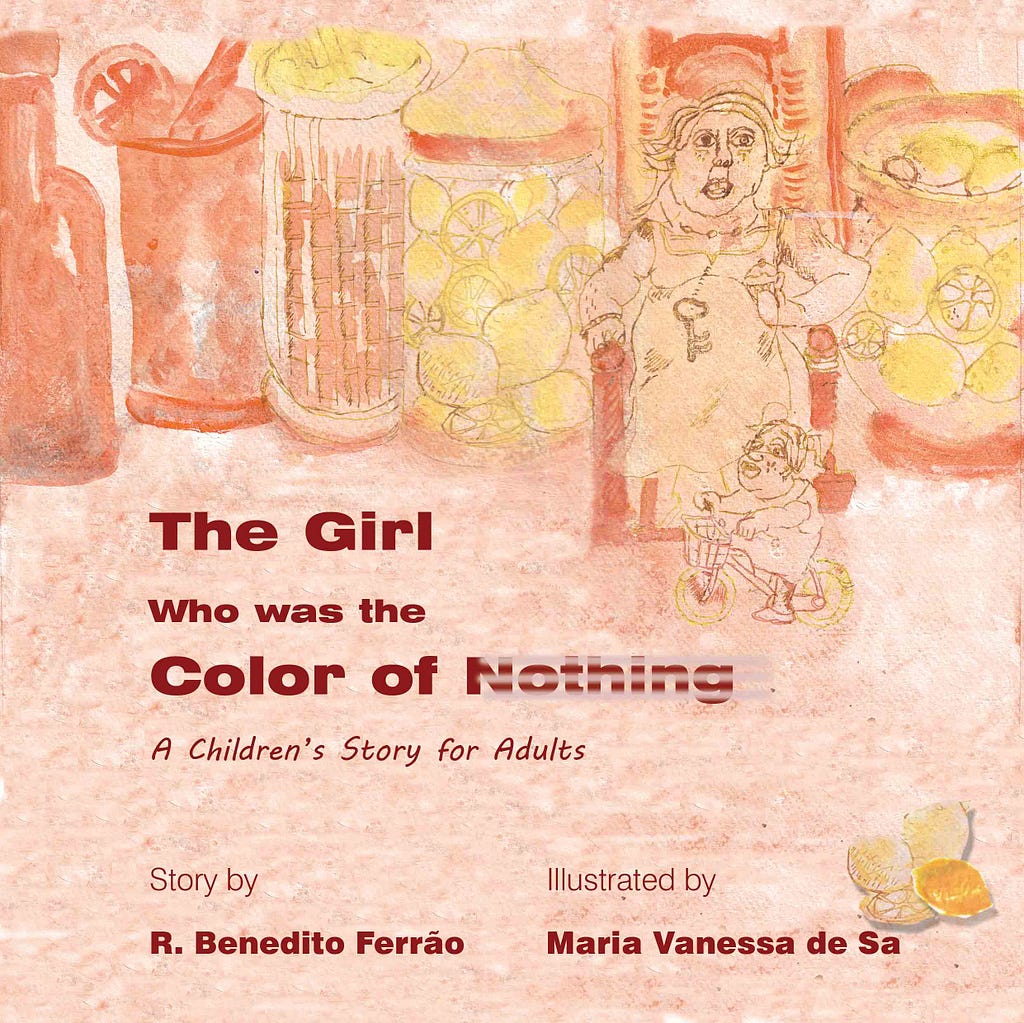
This is not an easy book to categorise, and that is probably the point.
The Girl Who Was the Color of Nothing opens, as all good fairy tales do, with once upon a time. But Ferrão does not let the convention stand for long. Within the first breath, the narrator steps forward and addresses the reader directly, signalling that this story knows exactly where it is going. It is a disarming move, and it sets the tone precisely: intimate, a little mischievous, the kind of voice that conjures a room and an audience.
It is framed as a children’s story for adults, something a parent might read to a child at bedtime. Having read it, I would say that is accurate, with the caveat that the adult may be the one left wide awake long after the child has drifted off.
The premise draws on the legend of Our Lady of the Snows, a fourth-century Roman legend that found its way to Goa through the Catholic missionary tradition. Ferrão uses it to build a story about a family, a daughter named Neve, and an obsession with fair skin that begins as a prayer and ends as something far darker.
The tone is tragicomic and deliberate. The book earns its comedy early, before Neve is even born, through two suitors whose desperation to appear fair-skinned leads each of them to lengths that are both absurd and, one suspects, not entirely impossible. Both encounters end in disaster. Purificação, Neve’s mother, watches it all and learns absolutely nothing.
The naming throughout is pointed. Neve means snow. Purificação carries its own weight. The family name, Sacrafamília, means Holy Family. Ferrão names his characters with the care of someone who expects to be noticed, and the noticing rewards.
Neither parent is quite what they claim to be. The gap between their self-image and reality is precisely what they take out on their daughter.
What follows is a study in obsession, set in motion by something entirely ordinary. The comedy of the opening recedes as the rituals close in around Neve. The prohibition on darker-skinned playmates is never explained in the text, but it does not need to be. The reader understands what is being protected, and it is not only a complexion.
The book never asks aloud whether any of this would have been done to a son. It does not need to. Neve is not allowed to just be. She is shaped and managed into a project, rather than allowed to exist as a person. What becomes of her, the book is honest enough to leave open.
De Sa’s illustrations do not merely decorate this story. They breathe with it. Her figures are rendered in precise pen strokes with loose watercolour washes, overbearing in presence and impossible to look away from. She has a gift for faces that carry more than one thing at once: pride and anxiety, love and damage, sitting in the same expression.
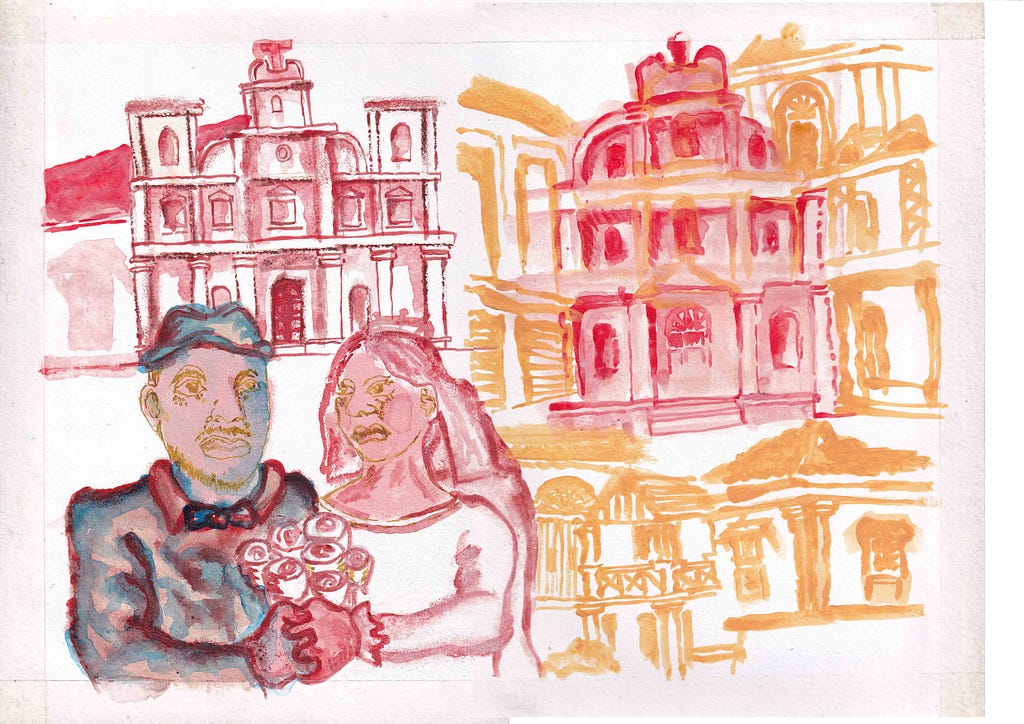
In the early sections, the palette runs warm: ochres, ambers, fleshy pinks. As the story darkens, the warmth drains away. Blues cool the domestic interiors. The tones thin and pale. By the final pages, de Sa has done with colour what Ferrão has done with language: removed it, incrementally, until what remains is almost nothing.
The attire, the architecture, and the expressions of the characters are all calibrated to the colonial visual world of Goa under the Portuguese. The illustrations do not illustrate the text so much as shadow it, arriving at the same places by different means. There is at least one image near the end that will stay with you longer than you expect.
The Girl Who Was the Color of Nothing is a small book with a long reach. It is rooted in Goan Catholic culture and its particular relationship with colonial inheritance, skin, and the standards imposed on women and girls in the name of beauty. The colourism it describes is not historical. It is alive and well and sold in pharmacies, rebranded but unchanged. But the wound the book presses on will be recognised in households far beyond Goa and far beyond Catholicism. That is what the best parables do. They travel, and they leave a mark. Much like the suitors in this story.
APIANIONATED: Even Snow Melts: On Skin, Silence, and a Children’s Story for Adults: A Review of R. was originally published in ANMLY on Medium, where people are continuing the conversation by highlighting and responding to this story.